
Indoor vs Outdoor Team Building Malaysia: Activities, Costs & How to Choose (2026)
Written By
Neeta
A practical comparison of indoor and outdoor team building for Malaysian companies — covering effectiveness, cost, safety, weather, venues, and when to choose each format for maximum team impact.
TL;DR Answer
A practical comparison of indoor and outdoor team building for Malaysian companies — covering effectiveness, cost, safety, weather, venues, and when to choose each format for maximum team impact.
Key Takeaways
- ✓ Indoor team building is more reliable (weather-proof, accessible, easier logistics) and better for cognitive skills like problem-solving and communication.
- ✓ Outdoor team building creates stronger emotional bonds and physical energy but requires more safety planning and weather contingency.
- ✓ Indoor programs cost 20–40% less than outdoor equivalents because venue, equipment, and safety requirements are simpler.
- ✓ The best programs are hybrid — combining indoor facilitation with outdoor challenges in a single day.
- ✓ In Malaysia, always have a rain plan. Monsoon season (Oct–Mar) makes outdoor-only programs risky without indoor backup.
- ✓ Choose based on team objective first, format second. Trust-building favours outdoor; skill-building favours indoor.
The most common question HR managers ask when planning team building in Malaysia is: "Should we go indoor or outdoor?" The honest answer is that it depends on what you are trying to achieve, not what looks more exciting. This guide helps you make the right choice.
"Indoor or outdoor?" is actually the wrong first question. The right first question is: "What do we need our team to do differently after this program?" Once you know the objective, the format choice becomes obvious.
This guide compares indoor and outdoor team building across every dimension that matters — effectiveness, cost, safety, weather, accessibility, venue options, and team suitability — so you can make a confident decision for your next program.
TL;DR: Quick Decision Framework
- Choose indoor if your objective is communication, problem-solving, strategy, or skill development. Also choose indoor if you have participants with mobility limitations, your date falls in monsoon season, or you need guaranteed delivery regardless of weather.
- Choose outdoor if your objective is trust-building, energy reset, team bonding, or breaking down silos. Best for physically capable groups in dry weather with a qualified provider.
- Choose hybrid if you want both emotional bonding and cognitive skill development. Morning outdoor, afternoon indoor is the most effective single-day format.
The Side-by-Side Comparison
| Factor | Indoor | Outdoor |
|---|---|---|
| Weather dependency | None | High (rain, heat, haze) |
| Cost per person | RM150–RM600 | RM200–RM700 |
| Safety complexity | Low | Medium to High |
| Accessibility | High (wheelchair, elderly friendly) | Variable (terrain dependent) |
| Emotional bonding | Moderate | High |
| Cognitive learning | High | Moderate |
| Logistics complexity | Low | Medium to High |
| Energy level | Moderate | High |
| Group size flexibility | 10–500+ | 10–200 |
| HRD Corp claimable | Yes | Yes |
Indoor Team Building: Strengths and When to Choose It
What indoor does best
Indoor team building excels at developing cognitive and interpersonal skills — communication, problem-solving, strategic thinking, decision-making under pressure, and creative collaboration. The controlled environment minimises distractions, keeps energy focused, and allows facilitators to create precisely designed learning moments.
Top indoor activities in Malaysia
- Escape room challenges. Teams solve puzzles under time pressure. Reveals communication patterns, leadership dynamics, and decision-making styles. 60 to 90 minutes per session.
- Business simulation games. Teams run a simulated company, making strategic decisions with real trade-offs. Excellent for cross-functional teams and leadership programs.
- Lego Serious Play. Structured methodology using Lego to explore team dynamics, strategy, and vision. Surprisingly powerful for serious topics in a playful format.
- Cooking classes. Collaborative cooking with assigned roles (timekeeper, quality checker, plating lead). Creates a tangible deliverable and natural debrief moments.
- Drum circles. Teams create music together with no prior experience. Teaches listening, coordination, and the feeling of collective achievement. Works for groups of 20 to 300.
- Creative workshops. Pottery, painting, batik-making. Low intimidation, high psychological safety. Great for teams that rarely slow down.
- VR missions. Virtual reality team challenges that simulate coordination under pressure. Appeals to tech-forward teams.
- Board game strategy sessions. Cooperative board games with facilitated debrief. Ideal for introverted teams or after-hours sessions.
Best indoor venues in Malaysia
- Hotel ballrooms. Sunway Resort, Hilton PJ, Marriott Putrajaya. Full catering, AV, and breakout rooms. Best for groups of 50+.
- Conference centres. Setia City Convention Centre, KL Convention Centre. Large capacity with flexible layouts.
- Co-working spaces. Common Ground, Colony. Modern vibe for smaller groups of 10 to 30.
- Your own office. Zero venue cost. Good for half-day quarterly sessions.
- Specialty venues. Escape rooms, cooking studios, art studios, VR arcades. Activity and venue combined.
When to choose indoor
- The objective is skill development (communication, problem-solving, leadership).
- Participants have diverse physical abilities or limitations.
- The program date falls in monsoon season (October to March) and cannot be rescheduled.
- You need guaranteed delivery regardless of weather.
- Budget is tight — indoor programs cost 20 to 40 percent less.
- Group size exceeds 200 participants.
- You want to combine team building with a training workshop or conference.
Outdoor Team Building: Strengths and When to Choose It
What outdoor does best
Outdoor team building excels at creating emotional bonding, trust, and shared physical experiences that teams remember long after the event. There is something about conquering a challenge together in the open air — getting dirty, laughing at failures, celebrating wins — that air-conditioned ballrooms cannot replicate.
Top outdoor activities in Malaysia
- Amazing Race. Teams navigate city or nature routes with checkpoints, challenges, and time pressure. The most popular corporate format in Malaysia. Best in KL, Putrajaya, Melaka, and Penang urban zones.
- Obstacle courses and field challenges. Low ropes, relay races, problem-solving stations. High energy, high engagement. Requires flat, accessible terrain.
- Jungle trekking and nature walks. Easy to moderate trails with facilitated reflection questions. Ideal for team reset and deeper conversations away from the office.
- Kayaking and water activities. Strong bonding but requires strict safety protocols — lifeguards, life jackets, swim assessments, and weather checks. See our safety guide for the full checklist.
- Cycling challenges. Team rides through scenic routes with cooperative challenges at stops. Works well in Putrajaya, Cyberjaya, and Langkawi.
- Archery tag and paintball. Fast-paced competitive activities. Good for young, energetic teams. Less effective for mixed-age groups.
- CSR outdoor projects. Beach clean-ups, tree planting, community builds. Combines team bonding with social impact. Growing in popularity among ESG-conscious companies.
Best outdoor venues in Malaysia
- Taman Botani Shah Alam (Bukit Cahaya). Large green space with trails, gardens, and open fields. Low cost. 45 minutes from KL.
- Putrajaya Lake and parks. Cycling paths, kayaking, and garden spaces with international hotels nearby for mixed programs.
- Sunway Lagoon. Theme park plus resort. High energy for large groups (100+).
- Sepang Gold Coast. Beach setting with water activities. 60 minutes from KL.
- Janda Baik. Mountain eco-lodges with rivers, jungle trails, and team campsites. Best for overnight retreats — see our 2D1N team building guide for itineraries and pricing.
- FRIM (Forest Research Institute Malaysia). Canopy walk, jungle trails, and nature education. 30 minutes from KL.
When to choose outdoor
- The objective is trust-building, bonding, or breaking down department silos.
- The team has been under high stress and needs an energy reset.
- All participants are physically capable and comfortable with outdoor activities.
- The program date falls in the drier months (April to September in peninsular Malaysia).
- You have a qualified provider with documented safety protocols and insurance.
- Group size is 10 to 150 (outdoor logistics become complex beyond 200).
The Malaysia Weather Factor
You cannot talk about outdoor team building in Malaysia without talking about weather. Malaysia has a tropical climate with rain possible year-round, but patterns are predictable enough to plan around:
- West coast monsoon (Oct–Mar): Heavy afternoon and evening rain on the west coast (KL, Selangor, Penang, JB). Outdoor programs in this period need strong indoor backup plans.
- East coast monsoon (Nov–Feb): Very heavy rain on the east coast (Terengganu, Kelantan, Pahang coast). Avoid outdoor programs in these states during these months.
- Best outdoor months (Apr–Sep): Drier across most of Malaysia. Morning programs have the best weather; afternoon rain is still possible but less frequent.
- Heat index: Malaysia's average temperature is 27–33 degrees Celsius with 70–90% humidity. Outdoor programs must include hydration breaks every 30 to 45 minutes, shade access, and heat stress monitoring.
- Haze season (Aug–Oct): Transboundary haze from land clearing can make outdoor activities unhealthy. Monitor the Air Pollutant Index (API) and have indoor contingency for days above 100.
The Hybrid Solution: Best of Both Worlds
The most effective team building format we deliver at Redefine Learning Asia is a hybrid program that combines outdoor and indoor elements in a single day:
Recommended hybrid schedule
- 8:30 AM — Arrival and warm-up (indoor). Icebreakers, team rules, and objective setting in a conference room.
- 9:00 AM — Outdoor challenges (outdoor). 2.5 hours of physical team challenges, Amazing Race, or field activities while the weather is best.
- 11:30 AM — Transition and refreshments. Move indoors, cool down, hydrate.
- 12:00 PM — Lunch.
- 1:00 PM — Indoor strategy session (indoor). Business simulation, problem-solving challenge, or creative workshop. Deeper cognitive engagement without weather risk.
- 3:00 PM — Debrief and action planning (indoor). Facilitated reflection connecting morning experiences to afternoon insights. Teams create a 30-day action commitment.
- 4:00 PM — Closing.
Why hybrid works best
- Emotional bonding from morning outdoor activities creates trust.
- Cognitive learning from afternoon indoor sessions creates skill transfer.
- Weather risk is halved because the critical indoor sessions are protected.
- Energy management is natural — high energy morning, focused energy afternoon.
- Every participant finds their comfort zone somewhere in the day.
Safety Considerations: Indoor vs Outdoor
Indoor safety
Indoor programs carry lower inherent risk, but safety still matters:
- Venue fire exits and emergency procedures briefed to all participants.
- First-aid kit and trained responder on-site.
- Activity risk assessment for physical indoor games (avoid injury from running on slippery floors, lifting heavy objects).
- Food allergy awareness for catering.
Outdoor safety
Outdoor programs require comprehensive safety planning:
- Written risk assessment for every activity.
- Public liability insurance (ask to see the certificate).
- Certified safety personnel for adventure and water activities.
- Weather monitoring and documented go/no-go protocols.
- Emergency response plan including nearest hospital and evacuation route.
- Participant health declarations and fitness screening.
- Life jackets and lifeguards for any water-based activity.
For the complete 10-point safety checklist, read our team building safety in Malaysia guide.
Cost Comparison
Indoor programs are consistently 20 to 40 percent cheaper than outdoor programs for equivalent duration and group size:
- Indoor half-day: RM150–RM400 per person. Your office boardroom as the venue = RM0 venue cost.
- Outdoor half-day: RM200–RM500 per person. Venue, equipment, safety, and transport add up.
- Indoor full-day: RM300–RM600 per person.
- Outdoor full-day: RM400–RM700 per person.
- Hybrid full-day: RM350–RM650 per person. The best value for impact-per-ringgit.
All formats are HRD Corp SBL-Khas claimable when delivered by a registered provider with documented learning outcomes. For full pricing details, see our team building cost guide.
Making the Decision: A Simple Framework
Answer these 4 questions and the format chooses itself:
- What is the primary objective? Skill development = indoor. Trust and bonding = outdoor. Both = hybrid.
- What is the physical profile of the group? Diverse abilities, older participants, or mobility constraints = indoor. Fit, active, and willing = outdoor.
- What season is the program? Monsoon season = indoor or hybrid with strong backup. Dry season = outdoor is viable.
- What is the budget? Tight budget = indoor. Flexible budget = hybrid for maximum impact.
Frequently Asked Questions
Is indoor or outdoor team building better?
Neither is universally better — it depends on your objective. Indoor team building is better for skill development (communication, problem-solving, leadership) and is weather-proof, cheaper, and accessible to all fitness levels. Outdoor team building is better for trust-building, bonding, and energy reset. For most Malaysian companies, a hybrid format — outdoor challenges in the morning, indoor facilitation in the afternoon — delivers the best of both.
How much does indoor team building cost in Malaysia?
Indoor team building in Malaysia costs RM150–RM400 per person for a half-day programme and RM300–RM600 per person for a full day. Using your own office or boardroom as the venue brings the cost down further, since venue rental is the largest add-on. Indoor formats are typically 20–40% cheaper than equivalent outdoor programmes.
How much does outdoor team building cost in Malaysia?
Outdoor team building in Malaysia costs RM200–RM500 per person for a half day and RM400–RM700 per person for a full day. The premium over indoor formats pays for venue access, equipment, transport, insurance, and certified safety personnel — non-negotiable for adventure and water-based activities.
Are indoor and outdoor team building both HRD Corp claimable?
Yes. Both formats are claimable under HRD Corp SBL-Khas when delivered by a registered training provider with documented learning outcomes. The format does not affect claimability — the structure does: a purely recreational outing does not qualify, whether indoor or outdoor. The 2026 in-house cap is RM10,500 per day per group.
What are the best months for outdoor team building in Malaysia?
April to September is the drier window across peninsular Malaysia, and morning sessions have the most reliable weather. Avoid outdoor-only programmes on the west coast from October to March (monsoon) and on the east coast from November to February. Always contract a rain plan — a same-venue indoor backup is the standard.
What indoor team building activities work for large groups?
Drum circles (20–300 pax), business simulations, cooking challenges in parallel stations, and ballroom-scale games run well for large groups indoors. Hotel ballrooms and convention centres in KL and Selangor handle 100–500 participants comfortably — indoor is usually the only practical format above 200 pax.
Still unsure? Contact us and we will recommend the best format based on your team size, objective, and timeline. Explore our full program catalog for indoor, outdoor, and hybrid team building options — all HRD Corp claimable with end-to-end claim support.
This article is part of our Team Building Malaysia resources. See the full programme range, formats, group sizes, and HRD Corp claim pathway there — or browse every named programme in our corporate training programmes catalogue.
Take the next step
Related Articles
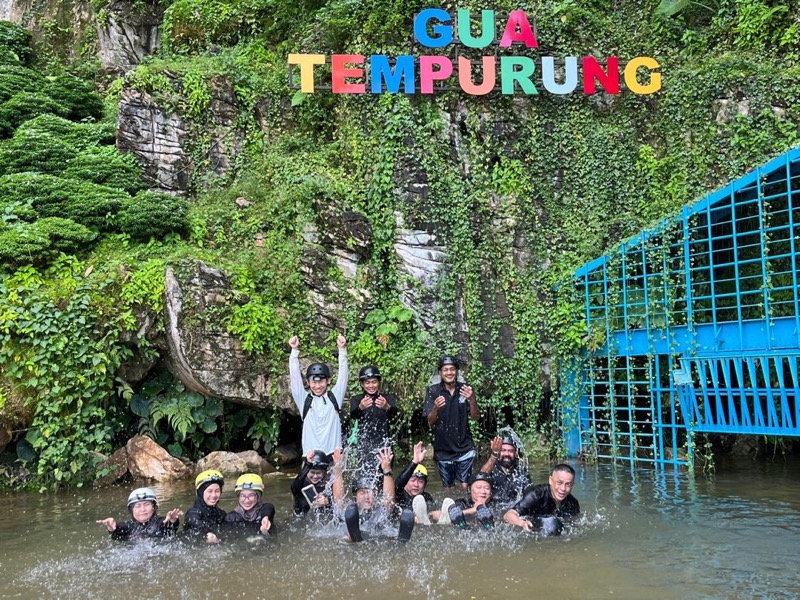
Why Gopeng Is Malaysia's Ultimate Team Building Destination
Discover why Gopeng, Perak is the top choice for corporate team building in Malaysia — from Gua Tempurung cave exploration to white water rafting on Sungai Kampar.

Team Building Malaysia Cost Guide 2026: Pricing, Budgets & What You Actually Pay
How much does team building cost in Malaysia in 2026? This guide breaks down pricing for indoor, outdoor, virtual, and hybrid formats — with real MYR ranges, cost factors, and how HRD Corp claims can reduce your out-of-pocket spend to zero.

Best Team Building Venues in Kuala Lumpur & Selangor (2026 Guide)
A detailed guide to 12 team building venues across KL and Selangor — with capacity, pricing, indoor/outdoor options, and HRD Corp claimability for every venue.
Inspired by this read?
Let's discuss how we can bring these insights into your next corporate training or team building session.