
How AI Adoption Gives Malaysian SMEs a Real Competitive Advantage
Written By
Neeta Sharma
AI is often framed as something only large corporations can afford. In reality, AI gives small and medium enterprises in Malaysia one of their biggest opportunities to compete above their size.
TL;DR Answer
AI is often framed as something only large corporations can afford. In reality, AI gives small and medium enterprises in Malaysia one of their biggest opportunities to compete above their size.
Key Takeaways
- ✓ AI levels the playing field, letting lean Malaysian SMEs produce work at a scale once reserved for large firms.
- ✓ The fastest wins come from applying AI to repetitive, high-volume tasks rather than chasing complex projects.
- ✓ Adoption fails most often because of skills and process gaps, not the technology itself.
- ✓ Starting with one department and a clear use case beats a broad, unfocused rollout.
- ✓ HRD Corp registered SMEs can fund AI upskilling through their levy, making adoption affordable.
There is a persistent myth that artificial intelligence is a big-company game, something that only multinationals with deep budgets can take advantage of. For Malaysian small and medium enterprises, the opposite is closer to the truth. AI is one of the few tools that lets a lean team punch well above its weight, and SMEs that adopt it thoughtfully can compete with much larger rivals.
As an HRD Corp certified provider working with companies across Kuala Lumpur, Selangor, and beyond, Redefine Learning Asia has seen how the right approach to AI turns limited headcount into a genuine advantage rather than a constraint.
1. Why AI Favours the Agile
Large organisations move slowly. Approval layers, legacy systems, and internal politics all slow down change. SMEs do not have those barriers. A Malaysian SME can decide on Monday to start using AI for proposals and customer responses, and be doing it by Friday. That agility is exactly what AI rewards.
AI also collapses tasks that used to require entire teams. A small marketing function can now research, draft, and localise content at a scale that previously needed an agency. A two-person finance team can automate reporting that once consumed half their week. The result is leverage: more output from the same people.
2. Start Where the Volume Is
The most common SME mistake is starting with an ambitious, complicated AI project. The better approach is to start where there is repetitive, high-volume work, because that is where AI pays back fastest.
- Customer communication: drafting replies, summarising enquiries, and handling routine questions.
- Sales support: generating proposals, follow-ups, and tailored pitches.
- Content and marketing: social posts, product descriptions, and campaign variations.
- Admin and reporting: meeting notes, document drafting, and data summaries.
Pick one of these, prove the value, then expand. This mirrors the disciplined approach we recommend in our broader corporate training guide for Malaysian HR teams.
3. Adoption Fails on Skills, Not Software
When AI adoption stalls in an SME, the cause is rarely the technology. It is almost always a skills and process gap. Employees are handed a tool with no guidance, get mediocre results, and quietly stop using it. The fix is not a better tool, it is a confident team.
This is why training is the highest-leverage investment an SME can make in AI. A short, practical programme that teaches staff how to prompt well, check outputs, and fit AI into their existing workflow will deliver more value than any single piece of software. Our overview of why AI skills now matter explains the underlying shift.
4. Keep the Human in the Loop
Speed without judgement is dangerous, especially for a small business where one bad customer interaction or inaccurate proposal carries real weight. The SMEs that succeed with AI build a simple discipline: AI drafts, a human reviews. That keeps quality high while still capturing the speed benefit.
It also reinforces why human capability still matters. The ability to spot when an AI output is wrong, off-brand, or culturally tone-deaf comes from experience and strong soft skills, not from the tool.
5. Fund It Through HRD Corp
For HRD Corp registered SMEs, AI upskilling does not need to strain cash flow. Structured AI training from a registered provider can be claimed under SBL-Khas, turning the levy you already contribute into a workforce capability you can use immediately. Our HRD Corp claim guide walks through how this works for smaller employers.
Compete Above Your Size
AI does not guarantee an SME will win, but it removes one of the oldest excuses, that you are too small to compete. With a focused use case, a trained team, and a human review step, a Malaysian SME can deliver work that looks and feels like it came from a much larger organisation.
Redefine Learning Asia builds practical AI programmes sized for SMEs. Explore our training solutions or get in touch to design an AI adoption plan for your team.
Related Articles

AI Training for Malaysian Companies: ChatGPT, Copilot & Beyond
Why Malaysian companies need AI training now, what employees actually learn, how to measure ROI, and how to claim the full cost through HRD Corp. A practical guide for HR managers and business leaders.

Why AI Skills Are No Longer Optional for the Malaysian Workforce
Artificial intelligence is no longer a future trend for Malaysian companies, it is a present-day capability gap. Here is why AI skills now matter for every role, and how to start building them.
Why Gopeng Is Malaysia's Ultimate Team Building Destination
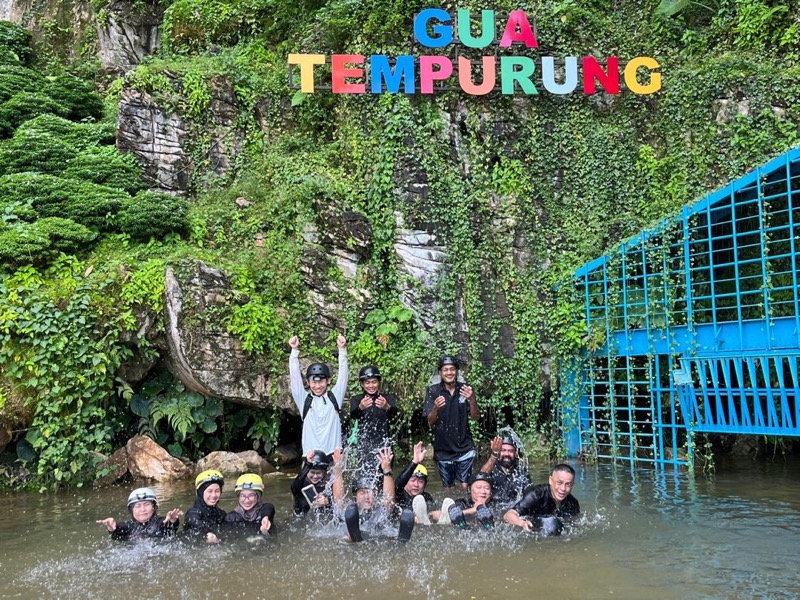
Discover why Gopeng, Perak is the top choice for corporate team building in Malaysia — from Gua Tempurung cave exploration to white water rafting on Sungai Kampar.
Inspired by this read?
Let's discuss how we can bring these insights into your next corporate training or team building session.