Why AI Skills Are No Longer Optional for the Malaysian Workforce
Written By
Neeta Sharma
Artificial intelligence is no longer a future trend for Malaysian companies, it is a present-day capability gap. Here is why AI skills now matter for every role, and how to start building them.
TL;DR Answer
Artificial intelligence is no longer a future trend for Malaysian companies, it is a present-day capability gap. Here is why AI skills now matter for every role, and how to start building them.
Key Takeaways
- ✓ AI is shifting from a specialist tool to a baseline workplace skill across finance, marketing, operations, and HR.
- ✓ The biggest risk for Malaysian companies is not AI itself, but a workforce that cannot use it while competitors can.
- ✓ Knowledge and administrative roles are being reshaped first, making AI literacy urgent for white-collar teams.
- ✓ AI skills are most effective when paired with strong human judgement and communication, not used in isolation.
- ✓ Structured AI training in Malaysia can be HRD Corp SBL-Khas claimable, lowering the cost of upskilling to near zero for eligible employers.
For most of the last decade, artificial intelligence in the Malaysian workplace was treated as a specialist concern, something for data teams and IT departments. That assumption is now outdated. AI has moved from a back-office tool to a baseline capability that touches finance, marketing, operations, customer service, and human resources. For Malaysian companies, the question is no longer whether AI matters, but whether your people can actually use it.
At Redefine Learning Asia, an HRD Corp certified training provider with more than 25 years of experience, we are seeing the same pattern across industries: the technology is already available, but the workforce skills to apply it are not. That gap is where competitive advantage is won or lost.
1. The Real Risk Is Not AI, It Is Being Left Behind
The popular fear is that AI will replace jobs. The more accurate and more immediate risk for Malaysian businesses is simpler: teams that cannot use AI will be out-produced by teams that can. A marketing executive who uses AI to draft, test, and refine campaigns moves several times faster than one who does not. A finance team that automates reconciliation spends its time on analysis instead of data entry.
This is why AI literacy is now a workforce issue, not an IT project. The companies pulling ahead are not necessarily the ones with the biggest technology budgets. They are the ones whose ordinary employees know how to put AI to work in their daily tasks.
2. The Roles Being Reshaped First
AI is not changing every job at the same pace. Knowledge and administrative roles are being reshaped first, which means white-collar Malaysian professionals feel the impact soonest.
- Marketing and content: drafting, localisation, audience research, and performance analysis.
- Finance and operations: reporting, forecasting, document processing, and anomaly detection.
- HR and L&D: screening, scheduling, policy drafting, and learning content creation.
- Customer service: first-line responses, summarisation, and knowledge retrieval.
The lesson for HR leaders is that AI upskilling should start with these high-exposure functions rather than waiting for a company-wide rollout. Our guide to AI training for Malaysian companies breaks down where to begin by department.
3. AI Skills Without Human Skills Fall Flat
One of the most common mistakes we see is treating AI as a replacement for judgement. In practice, AI amplifies the person using it. An employee with weak critical thinking will produce confident-sounding but flawed work faster. An employee with strong reasoning, communication, and domain knowledge will produce excellent work faster.
This is why the most future-ready training pairs technical AI fluency with human capability. The skills that make AI output trustworthy, such as evaluating sources, framing problems, and communicating clearly, are exactly the soft skills Malaysian companies need in 2026. AI raises the value of human judgement, it does not remove it.
4. What Effective AI Training Looks Like
Generic, theory-heavy AI courses rarely change behaviour. Effective AI training in a Malaysian corporate context shares a few traits:
| Weak AI Training | Effective AI Training |
|---|---|
| Generic tool demos | Role-specific use cases |
| One-off webinar | Practice on real work tasks |
| Theory of how AI works | Hands-on prompting and review |
| No follow-up | Reinforcement and measurement |
The goal is not to make everyone a data scientist. It is to make every employee confident enough to use AI safely and productively in their own role.
5. AI Training Can Be HRD Corp Claimable
Cost is the objection we hear most often, and it is usually misplaced. Structured AI training delivered by a registered provider can qualify under HRD Corp SBL-Khas, which means eligible Malaysian employers can claim the investment against their levy. For many companies this brings the effective cost of upskilling close to zero. You can learn more about the mechanics in our HRD Corp claim guide.
Start Building AI Capability Now
AI is not a wave that is coming, it has already arrived in the Malaysian workplace. The companies that treat AI literacy as a core workforce skill today will compound that advantage for years. Those that wait will spend the next few years catching up.
Redefine Learning Asia designs AI training programmes around your team and your actual workflows. Explore our training solutions or talk to us about an AI readiness programme for your organisation.
Related Articles

AI Training for Malaysian Companies: ChatGPT, Copilot & Beyond
Why Malaysian companies need AI training now, what employees actually learn, how to measure ROI, and how to claim the full cost through HRD Corp. A practical guide for HR managers and business leaders.
How AI Adoption Gives Malaysian SMEs a Real Competitive Advantage
AI is often framed as something only large corporations can afford. In reality, AI gives small and medium enterprises in Malaysia one of their biggest opportunities to compete above their size.
Why Gopeng Is Malaysia's Ultimate Team Building Destination
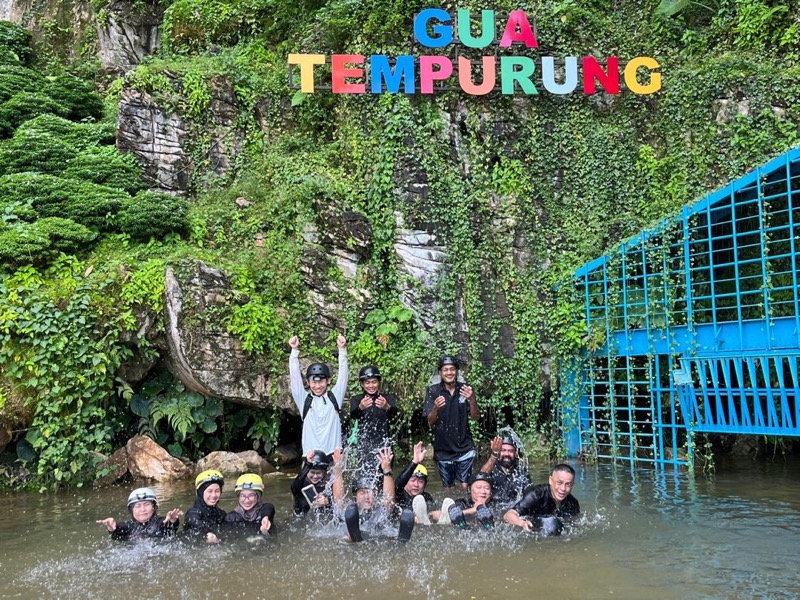
Discover why Gopeng, Perak is the top choice for corporate team building in Malaysia — from Gua Tempurung cave exploration to white water rafting on Sungai Kampar.
Inspired by this read?
Let's discuss how we can bring these insights into your next corporate training or team building session.