
Team Building for Hybrid & Remote Teams in Malaysia (2026 Guide)
Written By
Neeta Sharma
A complete guide to building team cohesion in hybrid and remote work environments — covering virtual activity ideas, hybrid format best practices, technology tools, and engagement strategies for Malaysian companies.
TL;DR Answer
A complete guide to building team cohesion in hybrid and remote work environments — covering virtual activity ideas, hybrid format best practices, technology tools, and engagement strategies for Malaysian companies.
Key Takeaways
- ✓ By 2026, 58 percent of Malaysian knowledge workers operate in hybrid or fully remote arrangements — team building must adapt to this reality or lose relevance.
- ✓ Virtual team building works when activities are designed for the medium — not when you take an in-person activity and put it on Zoom.
- ✓ The most effective hybrid team building format is quarterly in-person sessions (for deep bonding) combined with monthly virtual touchpoints (for continuity).
- ✓ Technology is an enabler, not a solution — the quality of facilitation and debrief matters more than whether you use Zoom, Teams, or Gather.
- ✓ Remote team building should focus on 3 outcomes: psychological safety (people feel comfortable speaking up), social connection (people know each other as humans), and alignment (everyone understands shared goals and roles).
TL;DR — Hybrid and remote team building requires different design, different facilitation, and different measurement than in-person events. This guide covers 12 virtual activity ideas, the optimal hybrid rhythm (quarterly in-person + monthly virtual), technology tools, engagement strategies, and how to make virtual team building HRD Corp claimable — all tailored to the Malaysian corporate context.
By 2026, an estimated 58 percent of Malaysian knowledge workers operate in hybrid or fully remote arrangements. The shift that started as a pandemic response has become a permanent structural change in how Malaysian companies work. But while work practices have evolved, most team building has not.
Too many companies either skip team building entirely for remote teams ("we will do it when everyone is back in the office") or try to force in-person formats onto Zoom calls ("let us do an escape room on Teams"). Both approaches fail. Remote teams need team building more than office teams — because they lack the casual hallway conversations, lunch chats, and spontaneous interactions that build trust naturally.
This guide provides a complete framework for building team cohesion in hybrid and remote environments, with practical activities, technology recommendations, and strategies tested with Malaysian corporate teams.
The 3 Challenges of Remote Team Cohesion
Before jumping to solutions, understand the specific challenges remote and hybrid teams face:
1. Isolation and Disconnection
Remote workers report feeling "out of the loop" at 2.5 times the rate of office workers. In Malaysia's collectivist culture, where workplace relationships are deeply valued, isolation hits particularly hard. Team members who feel disconnected disengage gradually — and disengagement is the precursor to resignation.
2. Communication Gaps
In-office teams communicate through hundreds of micro-interactions daily — a quick question at someone's desk, a conversation in the pantry, body language in a meeting. Remote teams lose 80 percent of these interactions. What remains is scheduled meetings and text messages — both of which strip context and nuance.
3. Trust Deficit
Trust is built through repeated positive interactions over time. In an office, this happens naturally. Remotely, it requires intentional design. Without trust, teams default to excessive reporting, micro-management, and CYA (cover your actions) behaviour — all of which destroy productivity and morale.
The Optimal Hybrid Team Building Rhythm
The most effective approach for Malaysian hybrid teams is a structured rhythm that combines in-person depth with virtual continuity:
Quarterly: In-Person Team Building (Half-Day or Full-Day)
Nothing replaces physical presence for deep bonding, trust building, and relationship repair. Bring the full team together once per quarter for a facilitated team building session. Use this time for:
- Activities that require physical interaction (outdoor challenges, cooking, creative workshops)
- Deep conversations about team dynamics, roles, and collaboration
- Relationship building between team members who rarely interact virtually
- Celebrating wins and acknowledging contributions face-to-face
Budget guideline: RM150 to RM400 per person per quarter (venue, facilitator, F&B). Fully HRD Corp claimable when conducted by a registered provider.
Monthly: Virtual Team Touchpoint (60 to 90 Minutes)
A structured virtual session that maintains connection between quarterly in-person events. This is not a regular team meeting — it is a dedicated team building and social connection session. Rotate between different formats:
- Virtual team challenges (trivia, escape room, creative competition)
- Structured sharing sessions ("What is one thing you are proud of this month?")
- Skill-sharing workshops (a team member teaches something they are expert in)
- Guest speaker or learning session on a topic the team chose
Budget guideline: RM0 to RM50 per person (most virtual activities are low-cost or free).
Weekly: Informal Virtual Social Time (15 to 30 Minutes)
Replace the water cooler. A recurring optional slot where team members can join for casual conversation — no agenda, no work topics, just human connection. Some teams do "virtual coffee" on Mondays, others do "Friday wind-down." The key is consistency and zero pressure to attend.
12 Virtual Team Building Activities That Actually Work
These activities have been tested with Malaysian corporate teams and consistently receive positive feedback. They are organised by objective:
For Problem-Solving and Communication
1. Virtual Escape Room
Duration: 60 to 75 minutes. Platform: Dedicated escape room platforms or custom-built in Google Slides/Forms. Teams solve puzzles together using video call communication. Reveals communication patterns, leadership dynamics, and problem-solving approaches. Debrief is essential — without it, you have entertainment, not team building.
2. Online Murder Mystery
Duration: 90 minutes. Each participant receives a character profile. Through structured conversations and clue-sharing, the team identifies the "culprit." Excellent for cross-department teams who do not know each other well, as characters provide a safe mask for interaction.
3. Virtual Strategy Challenge
Duration: 60 to 90 minutes. Present teams with a real business scenario (market entry, product launch, crisis response) and give them 30 minutes to develop and present a solution. Use breakout rooms for small group work, then reconvene for presentations. Works best with a facilitator who can guide the debrief toward team dynamics, not just solution quality.
For Social Connection and Bonding
4. Virtual Cooking Session (Malaysian Recipe)
Duration: 90 minutes. Send everyone the same ingredient list in advance. A facilitator (or team member who loves cooking) guides everyone through making the same Malaysian dish — nasi lemak, roti canai, kuih, or local favourites. The combination of multitasking, following instructions, and sharing the experience creates natural, relaxed bonding. Ship ingredient kits to remote team members for extra convenience.
5. Coffee Chat Rotation
Duration: 20 minutes per pair, weekly. Use a tool like Donut (Slack integration) or manual scheduling to randomly pair team members for 20-minute virtual coffee chats. No agenda — just get to know someone you do not usually interact with. Over 3 months, every team member will have had a personal conversation with every other member.
6. Show and Tell
Duration: 45 to 60 minutes. Each team member shares something personal — a hobby, a travel story, a family recipe, a hidden talent. Simple but surprisingly powerful for psychological safety. When people see each other as full human beings (not just job titles), collaboration improves.
7. Virtual Trivia Night
Duration: 45 to 60 minutes. Use Kahoot, Mentimeter, or Google Forms for a trivia competition. Mix categories: Malaysian geography, pop culture, industry knowledge, and team-specific inside jokes. Low pressure, high energy, and easy to run with minimal preparation.
For Alignment and Purpose
8. Team Charter Workshop
Duration: 90 minutes. Facilitated session where the team collectively defines: their shared purpose, working agreements (response times, meeting norms, communication channels), how they handle disagreements, and how they celebrate wins. The output is a one-page "team charter" that guides daily collaboration. Use Miro or Google Jamboard for collaborative editing.
9. Values Card Sort
Duration: 60 minutes. Each team member selects their top 5 values from a list of 30 and shares why those matter. Teams then identify shared values and discuss how those values should show up in their work. Reveals hidden alignment and helps teams understand each other's motivations.
10. Retrospective and Appreciation Circle
Duration: 45 to 60 minutes. Structured reflection on the past quarter: What went well? What was challenging? What should we change? End with an appreciation circle where each person acknowledges a specific contribution from a teammate. Combines process improvement with emotional connection.
For Energy and Fun
11. Virtual Amazing Race
Duration: 60 to 90 minutes. Teams compete through a series of online challenges: find specific information on the company website, solve riddles, complete creative challenges (take a photo that represents "teamwork"), answer rapid-fire questions. Use Google Forms for submissions and a live leaderboard in Google Sheets.
12. Online Game Tournament
Duration: 45 to 60 minutes. Collaborative online games like Among Us, Jackbox Games, or Gartic Phone. Best for younger teams or teams with a playful culture. Keep it voluntary and time-limited — forced fun backfires.
Hybrid Format Best Practices
Hybrid is the hardest format to get right because you have two groups with fundamentally different experiences: in-room participants and remote participants. Here is how to avoid the "second-class citizen" problem:
The "Remote-First" Design Principle
Design every activity assuming everyone is remote, then add in-person elements as enhancements. This ensures remote participants are never an afterthought. If an activity does not work virtually, do not use it in hybrid format.
Technical Setup for Hybrid Sessions
- Camera: Use a wide-angle conference camera (like Owl Labs or Logitech Rally) so remote participants can see the full room, not just whoever is closest to the laptop
- Audio: Use a dedicated conference microphone (Jabra Speak or Poly). Laptop microphones pick up echo and background noise that makes remote participation painful
- Screen sharing: Ensure remote participants can see all visual materials clearly. If using flip charts or whiteboards in the room, photograph and share them in real-time
- Facilitator: Assign one facilitator specifically to monitor the virtual channel and ensure remote participants are included. They should call on remote participants first in discussions
Activity Design Rules for Hybrid
- Use breakout rooms that mix in-person and remote. Do not let in-room people form one group and remote people form another — this reinforces the divide.
- Give remote participants specific roles. Timekeeper, note-taker, presenter — roles that keep them visibly involved.
- Use digital collaboration tools for all outputs. Even if in-room participants could use a whiteboard, use Miro or Jamboard so everyone contributes on the same platform.
- Schedule breaks every 60 minutes. Screen fatigue is real. In-room participants can chat during breaks; remote participants need the screen break.
Technology Tools for Virtual Team Building
You do not need expensive software. Here is a practical toolkit:
Essential (Free or Low-Cost)
- Zoom or Microsoft Teams: Video conferencing with breakout rooms. Most Malaysian companies already have one of these.
- Google Jamboard or Miro (free tier): Collaborative whiteboard for brainstorming, planning, and visual activities.
- Kahoot or Mentimeter: Interactive polls, quizzes, and trivia. Free for basic use.
- Google Forms: Surveys, pre-event assessments, and activity submissions.
- WhatsApp Group: Informal communication channel. Already universal in Malaysian workplaces.
Advanced (For Larger Teams or Frequent Virtual Events)
- Gather: Virtual office platform with spatial audio — team members move avatars around a virtual space and talk to whoever is nearby. Creates a sense of "being in the same place."
- Donut (Slack plugin): Automatically pairs team members for random coffee chats.
- Butter: Virtual facilitation platform designed for workshops, with built-in timers, polls, breakout rooms, and facilitation tools.
Engagement Strategies for Remote Teams
Beyond scheduled team building events, daily engagement practices keep remote teams connected:
1. Asynchronous Check-Ins
Replace the morning office greeting with a daily async check-in on Slack or Teams: "What are you working on today? How are you feeling?" Keep it optional but visible. Over time, it builds a rhythm of connection.
2. Recognition and Appreciation Systems
Remote teams miss the in-person "good job" moments. Create a dedicated Slack channel or WhatsApp group for peer recognition. Encourage specific recognition: "Thank you to Sarah for staying late to help debug the client report" is better than "Great work, team."
3. Virtual Onboarding Buddy System
New remote employees are at highest risk of disconnection. Assign every new hire a "buddy" — someone outside their direct team who checks in weekly for the first 3 months. This single practice reduces new hire turnover by up to 25 percent.
4. Cameras-On Culture (With Flexibility)
Encourage cameras on during team building and important meetings, but do not mandate it for every call. Camera fatigue is real. A good rule: cameras on for team building, optional for status updates.
5. Celebrate Milestones Virtually
Birthdays, work anniversaries, project completions, and personal milestones (new baby, graduation) — celebrate them in the team channel. In Malaysian culture, acknowledging personal milestones is especially important for relationship building. Send a GrabFood voucher or arrange a virtual celebration.
Measuring Virtual Team Building Effectiveness
The same Kirkpatrick framework applies to virtual team building (see our complete ROI measurement guide), with some virtual-specific metrics:
- Participation rate: What percentage of invited team members attend voluntary virtual events? Track over time — declining attendance signals event fatigue or poor design.
- Camera-on rate: Higher camera usage during virtual sessions correlates with higher engagement. Track as a proxy for participation quality.
- Cross-team communication: Use Slack or Teams analytics to measure message volume and cross-channel interactions before and after team building.
- Loneliness and isolation scores: Include isolation-related questions in your quarterly engagement survey. This is a leading indicator of turnover risk for remote workers.
- eNPS (Employee Net Promoter Score): "How likely are you to recommend this company as a place to work?" Track quarterly for remote team members specifically.
Making Virtual Team Building HRD Corp Claimable
Virtual and hybrid training programs are claimable under HRD Corp SBL-Khas. Key requirements:
- Program must be conducted by an HRD Corp registered training provider
- Grant application should specify "virtual" or "hybrid" delivery format
- Attendance verification: use platform attendance reports, screen captures of participants, or digital sign-in forms
- All standard documentation applies: evaluation forms, training reports, certificates
- Virtual delivery often has lower costs, which can mean more programs per levy ringgit
Redefine Learning Asia delivers both virtual and hybrid team building programs, with 25 years of facilitation experience adapted for digital environments. All our programs are HRD Corp claimable and include structured debriefs, action planning, and follow-up support. Contact us to design a team building strategy that works for your hybrid workforce, or explore our program catalog for available formats.
Related Articles
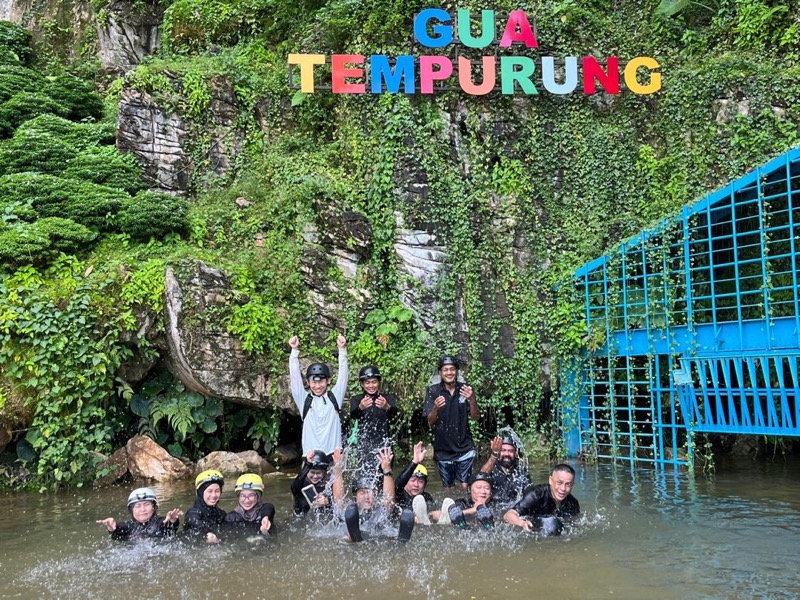
Why Gopeng Is Malaysia's Ultimate Team Building Destination
Discover why Gopeng, Perak is the top choice for corporate team building in Malaysia — from Gua Tempurung cave exploration to white water rafting on Sungai Kampar.

Team Building Malaysia Cost Guide 2026: Pricing, Budgets & What You Actually Pay
How much does team building cost in Malaysia in 2026? This guide breaks down pricing for indoor, outdoor, virtual, and hybrid formats — with real MYR ranges, cost factors, and how HRD Corp claims can reduce your out-of-pocket spend to zero.

Indoor vs Outdoor Team Building in Malaysia: Which Is Better for Your Team?
A practical comparison of indoor and outdoor team building for Malaysian companies — covering effectiveness, cost, safety, weather, venues, and when to choose each format for maximum team impact.
Inspired by this read?
Let's discuss how we can bring these insights into your next corporate training or team building session.