
Team Building Safety in Malaysia: A Risk Assessment Guide for HR Managers
Written By
Neeta
A recent tragedy at an outdoor kayaking activity in Perlis is a sobering reminder that team building safety is a business decision, not an afterthought. Here is the framework every HR manager in Malaysia should use before signing the next contract.
TL;DR Answer
A recent tragedy at an outdoor kayaking activity in Perlis is a sobering reminder that team building safety is a business decision, not an afterthought. Here is the framework every HR manager in Malaysia should use before signing the next contract.
Key Takeaways
- Every team building program should have a documented written risk assessment before booking — not verbal assurances.
- Water-based activities require certified lifeguards, life jackets, 1:8 supervision ratio, and weather protocols.
- Verify the vendor carries valid public liability insurance of at least RM1 million and OSHA 1994 compliance.
- Red flags to watch: no insurance certificate, no safety briefing, no emergency plan, refusal to share trainer credentials.
- HR managers are legally accountable under OSHA 1994 for employee safety during company-sanctioned activities.
On 4 April 2026, a kayaking activity in Perlis ended in tragedy when two young participants lost their lives. It is a sobering reminder that team building safety cannot be an afterthought. It is a business decision, a legal obligation, and a moral responsibility.
This guide is written for HR managers, L&D leads, and business owners in Malaysia who are about to book a corporate team building event and want to do it safely. It is not written to sell fear. It is written to help you ask the right questions, apply the right framework, and protect the people whose trust you are responsible for.
Our condolences remain with the families affected by the recent Perlis incident. The reference below is included only because the lesson it carries may help prevent another loss.
Why Safety in Team Building Is a Business Decision
When a team building activity goes wrong, three things fail at once:
- People are harmed. This is the human cost, and it is irreversible.
- The company is legally exposed. Under the Occupational Safety and Health Act 1994 (OSHA 1994), employers in Malaysia have a legal duty to ensure the safety, health, and welfare of employees at work, including during employer-organized activities.
- Trust inside the company collapses. Teams that lose a colleague at a company-sponsored event rarely recover the same culture.
The best protection against all three is a structured safety conversation before the program runs, not a post-incident report. If your vendor cannot answer the questions in this guide, they should not be running the program.

Malaysia's Legal and Compliance Framework
Before you book any team building program, make sure your provider operates within these four frameworks:
- OSHA 1994. Employers must provide a safe system of work. This extends to company-funded activities at external venues. If an accident occurs, DOSH (Department of Occupational Safety and Health) can investigate.
- Public Liability Insurance. Every credible provider should carry public liability cover. Ask to see the certificate and the coverage amount. A provider without insurance is transferring all risk to you.
- HRD Corp Vendor Standards. HRD Corp registered training providers are expected to meet minimum quality and compliance standards. Registration alone is not a safety guarantee, but unregistered providers carry significantly more risk.
- Venue and Activity Licensing. Water-based activities, high ropes, firearms, and adventure sports require specific operator licensing in Malaysia. Verify that the venue holds the correct certifications for the activity you are booking.
The 10-Point Pre-Activity Risk Assessment Checklist
Every team building program we run at Redefine Learning Asia starts with a documented risk assessment. Use this 10-point checklist with any vendor you are evaluating:
- Participant profile. Do you know each participant's fitness level, swimming ability, medical conditions, and any disabilities? Have waivers been collected?
- Activity-to-risk match. Is the chosen activity appropriate for the least experienced participant, not just the most adventurous?
- Facilitator-to-participant ratio. Water activities should never exceed 1 facilitator per 8 participants. High-risk activities may require 1 to 4.
- Certified safety personnel. Are lifeguards, paramedics, or qualified first-aiders on-site for the full duration, not just at check-in?
- Equipment inspection. When was equipment last inspected and certified? Is there a log? Is there a backup for every critical item?
- Weather and environment check. Are there written protocols for weather cancellation, water conditions, and heat index monitoring?
- Emergency response plan. What is the written evacuation plan? Which hospital is nearest? Who is the incident commander?
- Communication coverage. Does the activity site have mobile coverage or radio backup? Can emergency services be reached within 60 seconds?
- Insurance verification. Have you seen the public liability certificate and its coverage amount? Is the activity within its scope?
- Safety briefing documentation. Is there a structured pre-activity briefing with a sign-off list, not a casual "be careful, guys" announcement?
If a vendor cannot walk through all ten points in a single meeting, they are not ready to run your program. It is that simple.
Water-Based Activities: Additional Safety Protocols
The Perlis incident involved kayaking, and water-based activities carry a level of inherent risk that demands extra discipline. If your team is considering kayaking, rafting, snorkeling, beach games, island hopping, or boat transfers, insist on the following:
- Certified lifeguards on-site at all times. Minimum 1 lifeguard per 10 participants in water. They must be in the water or at the water's edge, not in the pavilion.
- Personal flotation devices (PFDs) for every participant. No exceptions. Even strong swimmers wear them. Inspect buckle condition and fit.
- Swim ability declaration. Non-swimmers must be identified before the activity and assigned to shallower zones or low-risk formats.
- Sea and weather condition check. Wave height, current, tide, and wind readings documented within 2 hours of the activity start. Written go or no-go call.
- Rescue boat or standby craft. A dedicated rescue boat with a trained operator, not a kayak doubling as a rescue vehicle.
- Headcount protocol. A roll call every 15 minutes with every participant accounted for by name. Logged.
- Return-to-shore signal. A clear audio and visual signal with a documented response protocol.
- First-aid and AED on-site. Including oxygen where feasible, not just plasters and iodine.

5 Questions to Ask Every Vendor Before You Sign
These five questions will filter out 80 percent of low-quality providers in a single phone call:
- "Can you send me your public liability insurance certificate and DOSH-aligned risk assessment template?" If they hesitate or promise to send it "later," walk away.
- "What is your facilitator-to-participant ratio for this activity, and what are the qualifications of each facilitator?" Specific numbers. Specific qualifications. Not vague "experienced team" claims.
- "Walk me through your emergency response plan for the worst-case scenario of this activity." A real vendor has a written plan. An amateur will improvise on the call.
- "Which incidents have you had in the past 3 years, and how were they handled?" No vendor with volume has zero incidents. A confident answer about how past incidents were handled is a sign of maturity. A defensive "we never have problems" is a red flag.
- "Are you HRD Corp registered, and can you provide your registration number?" Verify the registration number on the HRD Corp portal. Registration is not a safety guarantee, but it is a baseline of accountability.
Red Flags to Watch For
Over the years, we have seen a pattern in providers who later run into trouble. Watch for these warning signs:
- Pricing that is dramatically below the market. Safety costs money, and cheap vendors cut corners on insurance, equipment, and qualified staff.
- No written contract. Verbal agreements collapse the moment something goes wrong.
- No site visit or client safety briefing offered before booking.
- Facilitators who are casual hires, not trained employees with documented qualifications.
- No post-activity reporting or debrief on incidents and near-misses.
- Reluctance to provide references or past client contacts.
- Pressure tactics to sign quickly or pay upfront in cash.
What "Safe by Design" Actually Looks Like
At Redefine Learning Asia, safety is engineered into the program from the first diagnosis call:
- A pre-program risk assessment signed by a senior facilitator and the client sponsor.
- Activity selection matched to the least experienced participant, not the fittest.
- Certified first-aiders and, for water or adventure programs, licensed safety professionals on-site.
- Public liability insurance in place and disclosed on every quote.
- Pre-activity briefing with participant sign-off.
- Real-time weather, environment, and energy monitoring during delivery.
- Post-program incident and near-miss debrief shared with the client sponsor.
This is not marketing language. These are the operational standards every responsible corporate training provider in Malaysia should meet, and the baseline HR managers should expect.
A Respectful Closing Note
No guide can undo what happened in Perlis on 4 April 2026. What it can do is help the next HR manager ask better questions, and help the next group of colleagues come home safely from a company-sponsored day out. If this guide helps one team avoid preventable harm, it has done its job.
If you would like an independent review of your current team building provider or a proposal from a safety-first corporate training partner, reach out through our contact page or explore our program catalog. Our training solutions and employee onboarding programs all follow the same safety standards described above.
Source: News report on Perlis kayaking accident, Malaysia China Press (4 April 2026).
Related Articles
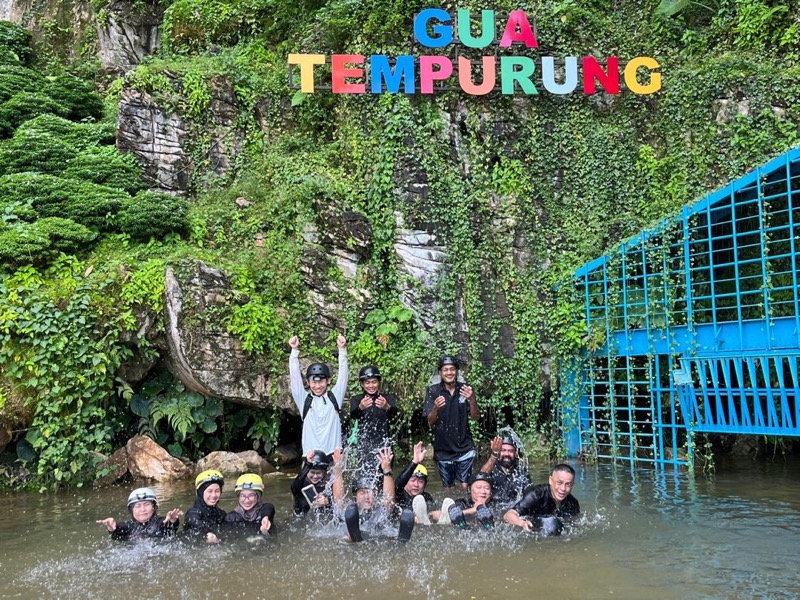
Why Gopeng Is Malaysia's Ultimate Team Building Destination
Discover why Gopeng, Perak is the top choice for corporate team building in Malaysia — from Gua Tempurung cave exploration to white water rafting on Sungai Kampar.

Team Building Malaysia Cost Guide 2026: Pricing, Budgets & What You Actually Pay
How much does team building cost in Malaysia in 2026? This guide breaks down pricing for indoor, outdoor, virtual, and hybrid formats — with real MYR ranges, cost factors, and how HRD Corp claims can reduce your out-of-pocket spend to zero.

Indoor vs Outdoor Team Building in Malaysia: Which Is Better for Your Team?
A practical comparison of indoor and outdoor team building for Malaysian companies — covering effectiveness, cost, safety, weather, venues, and when to choose each format for maximum team impact.
Inspired by this read?
Let's discuss how we can bring these insights into your next corporate training or team building session.