Corporate Training Cost in Malaysia 2026: Complete Budget Planning Guide
Written By
Neeta Sharma
Detailed breakdown of corporate training costs in Malaysia for 2026 — from per-person rates to full program budgets, HRD Corp levy offsets, and ROI calculations that justify every ringgit.
TL;DR Answer
Detailed breakdown of corporate training costs in Malaysia for 2026 — from per-person rates to full program budgets, HRD Corp levy offsets, and ROI calculations that justify every ringgit.
Key Takeaways
- ✓ In-house training costs RM5,000–RM25,000 per day for groups of 15–40, making the per-person cost 40–60% lower than public programs.
- ✓ Hidden costs — venue, materials, productivity loss, travel — can double the facilitator fee if not budgeted upfront.
- ✓ HRD Corp levy of 1% payroll creates a claimable training fund — a 50-person company accumulates RM30,000 per year in free training credits.
- ✓ A sample annual plan for 100 employees costs RM81,000 gross, but HRD Corp claims reduce net cost to as low as RM6,000.
- ✓ Training ROI formula: leadership training that reduces turnover by 10% in a 50-person team generates 317% ROI within 12 months.
Every HR leader faces the same question from finance: "How much should we budget for training this year?" The answer is rarely simple. The cost of corporate training in Malaysia varies dramatically based on program type, provider quality, group size, and delivery format. This guide gives you real numbers to plan with.
Understanding Corporate Training Cost Structures in Malaysia
Corporate training costs in Malaysia follow three primary pricing models, each suited to different organisational needs. Understanding these models is the first step toward building an accurate training budget.
Per-Person Public Programs
Public programs are open-enrollment courses where your employees join participants from other organisations. Typical costs range from RM500 to RM2,500 per person per day, depending on the topic complexity and facilitator seniority. These are cost-effective for training 1–3 employees but become expensive at scale. Public programs work best for standardised skills like HRD Corp compliance updates, time management, or basic Excel proficiency.
In-House Group Programs
In-house programs are customised to your organisation and delivered exclusively to your team. Typical costs range from RM5,000 to RM25,000 per day for groups of 15–40 participants. The per-person cost drops significantly: a RM15,000 in-house program for 30 people costs RM500 per person — versus RM1,500+ per person at a public course. In-house programs allow customisation with your company's case studies, terminology, and specific challenges.
Retainer or Annual Partnerships
Progressive organisations are shifting to annual training partnerships with preferred providers. These typically involve RM50,000 to RM300,000 annually for a package of 10–30 training days, plus needs assessment, customisation, and post-training support. The per-day rate is typically 15–25% lower than ad-hoc bookings, and the provider develops deep understanding of your culture over time.
Cost Breakdown by Training Category
Not all training costs the same. Here is what Malaysian companies should expect to pay across major training categories in 2026.
Soft Skills Training: RM8,000 – RM18,000 per day
Soft skills programs — communication, emotional intelligence, leadership, stress management — sit at the mid-to-upper price range. The higher cost reflects the facilitator expertise required: these programs demand experienced trainers who can handle sensitive interpersonal dynamics, manage diverse group discussions, and adapt exercises in real time. A two-day EQ in Communication program typically costs RM14,000–RM18,000 for a group of 20–30 participants.
Team Building Activities: RM5,000 – RM20,000 per event
Team building costs vary widely based on format and venue. Indoor programs at your office or a hotel meeting room start from RM5,000 for half-day sessions. Outdoor adventure programs at venues like Gopeng or Janda Baik range from RM10,000–RM20,000 including facilitation, equipment, and safety personnel. Add RM3,000–RM8,000 for venue rental, meals, and transport if not included.
Technical and Digital Skills: RM10,000 – RM25,000 per day
AI productivity workshops, data analytics, and digital transformation programs command premium rates due to the specialised expertise required. A full-day AI and ChatGPT workplace productivity workshop typically costs RM12,000–RM18,000 for 20–30 participants. Advanced programs with hands-on lab components or individual coaching can reach RM25,000 per day.
Leadership Development: RM12,000 – RM30,000 per day
Executive and leadership programs carry the highest day rates, reflecting the seniority of both facilitators and participants. A comprehensive supervisory skills program runs RM12,000–RM18,000, while C-suite leadership retreats with psychometric profiling and individual coaching can reach RM25,000–RM30,000 per day. Multi-module leadership journeys (4–6 sessions over 3–6 months) represent the highest total investment but also deliver the most measurable impact.
Compliance and Safety: RM3,000 – RM8,000 per day
Compliance training — occupational safety, regulatory updates, ethics — is typically the most affordable category. Content is more standardised, facilitator expertise is more widely available, and programs are often shorter (half-day to one day). However, industry-specific compliance training (financial services regulation, oil and gas safety) commands higher rates due to niche expertise.
Hidden Costs Most Companies Overlook
The facilitator fee is only part of the total training cost. Here are the hidden costs that blow budgets when not planned for:
Venue and F&B
RM2,000–RM8,000 per day. Hotel meeting rooms in KL cost RM2,000–RM5,000 per day including basic AV and coffee breaks. Add RM30–RM80 per person for lunch. Outdoor venues with accommodation can add RM150–RM300 per person per night. Budget tip: many training providers include venue sourcing in their service — ask about bundled rates.
Materials and Assessments
RM500–RM5,000 per program. Psychometric assessments (DISC, MBTI, EQ-i) cost RM80–RM250 per person for licensed instruments. Custom workbooks, printed materials, and certification costs add RM20–RM50 per participant. Digital assessments are increasingly replacing printed materials, reducing this cost.
Productivity Loss
Often the largest hidden cost. When 30 employees spend a full day in training, that is 240 person-hours of productive work diverted. For a team with an average salary of RM8,000/month, the implicit opportunity cost is approximately RM11,000 per day. This is why half-day programs and modular delivery (2-hour sessions over several weeks) are gaining popularity — they minimise disruption while maintaining learning effectiveness.
Travel and Logistics
RM1,000–RM10,000 depending on location. For organisations with offices across Malaysia, flying facilitators or participants to a central location adds travel costs. Consider hybrid delivery for geographically dispersed teams: in-person sessions at each office with virtual cross-location activities.
How HRD Corp Levy Offsets Training Costs
The HRD Corp levy system is Malaysia's most underutilised corporate benefit. Here is how it works and how to maximise your return.
How the Levy Works
Employers with 10+ Malaysian employees contribute 1% of monthly payroll to HRD Corp. For a company with 50 employees at an average salary of RM5,000, that is RM2,500 per month or RM30,000 per year in levy contributions. This money can be claimed back through approved training programs — essentially making training free if you use your full allocation.
Claim Rates Under SBL-Khas
Under the SBL-Khas scheme, companies can claim:
- Training fees: Up to RM1,000 per trainee per day (covers most in-house programs)
- Allowances: Meal (RM30/day), accommodation (RM100/night), travel (actual cost, max RM500)
- Assessment fees: Psychometric tools and certification exam fees
For a 2-day in-house program with 20 participants, the maximum HRD Corp claim can cover RM40,000–RM60,000 — often exceeding the actual program cost. This means the training is effectively free or even generates a net financial benefit when including the allowances claimed.
Common Claim Mistakes
- Late submissions: Claims must be submitted within 6 months of program completion. Many companies miss this deadline and forfeit reimbursement.
- Incomplete documentation: Missing attendance sheets, evaluation forms, or trainer credentials cause claim rejections. Ensure your training provider supplies all required documentation.
- Not checking provider registration: Only HRD Corp-registered providers are eligible for levy claims. Verify registration before engaging any provider.
- Leaving money on the table: An estimated 30–40% of employers do not fully utilise their levy balance. Check your current balance at the HRD Corp employer portal.
Building Your Annual Training Budget
Here is a practical framework for building a training budget that covers your key development needs while maximising HRD Corp offsets.
Step 1: Calculate Your Levy Balance
Log into the HRD Corp employer portal and check your current levy balance plus projected annual contributions. This is your baseline "free training fund" — plan to use 100% of it.
Step 2: Map Training Needs to Business Goals
Identify 3–5 business priorities that training can support. For example: reduce turnover (→ leadership training), improve customer satisfaction (→ communication skills), increase productivity (→ AI tools training). Align every training investment with a measurable business outcome.
Step 3: Build a Quarterly Calendar
Spread training across four quarters to manage operational disruption and cash flow. A sample annual plan for a 100-person company:
- Q1: Leadership development for managers (2 days, RM18,000)
- Q2: Team building + communication skills (1+2 days, RM25,000)
- Q3: AI productivity workshop for all staff (2 sessions × 1 day, RM24,000)
- Q4: EQ and stress management (1.5 days, RM14,000)
Total investment: RM81,000. With HRD Corp claims covering RM60,000–RM75,000, the net out-of-pocket cost is as low as RM6,000–RM21,000 for a comprehensive annual program.
Step 4: Select Providers Strategically
Choose 2–3 quality providers and negotiate annual partnerships. Ask for volume discounts on multi-program engagements. Verify HRD Corp registration, check facilitator credentials (15+ years experience), and request references from companies in your industry.
Calculating Training ROI
Finance teams want ROI numbers. Here is how to calculate and present training returns:
The Basic ROI Formula
Training ROI = (Monetary Benefit − Training Cost) ÷ Training Cost × 100%
Example: A leadership program costs RM18,000. Over the next 12 months, supervisors who attended the program reduce their team turnover from 25% to 15%. For a team of 50, that is 5 fewer resignations. At RM15,000 average replacement cost per employee, the monetary benefit is RM75,000. ROI = (75,000 − 18,000) ÷ 18,000 × 100% = 317% ROI.
Metrics to Track
- Turnover reduction: Compare pre/post training resignation rates for trained teams
- Productivity gains: Measure output per employee, error rates, or time-to-completion before and after training
- Customer satisfaction: Track NPS or CSAT scores for customer-facing teams post-training
- Engagement scores: Annual engagement surveys can show improvement in trained vs. untrained groups
- HRD Corp claim value: Track total claims recovered vs. contributions — aim for 90%+ utilisation
Cost Comparison: In-House vs Public vs Virtual
When choosing delivery format, cost is a key factor alongside effectiveness. Here is how the three main formats compare for a team of 20 participants:
| Factor | In-House (On-Site) | Public Program | Virtual |
|---|---|---|---|
| Per-person cost | RM400–RM800 | RM1,000–RM2,500 | RM300–RM600 |
| Total for 20 pax | RM8,000–RM16,000 | RM20,000–RM50,000 | RM6,000–RM12,000 |
| Customisation | High | None | Medium |
| Travel cost | Minimal | Per person | Zero |
| Productivity loss | Full day | Full day | Half day possible |
| HRD Corp claimable | Yes | Yes | Yes |
| Best for | 10+ participants | 1–3 participants | Dispersed teams |
The verdict: in-house programs are the most cost-effective format for groups of 10 or more. Virtual delivery offers the lowest total cost but may sacrifice learning depth for skills-practice programs. Public programs should only be used for small numbers of participants or niche topics not available in-house.
Frequently Asked Questions
How much does corporate training cost per employee in Malaysia?
The benchmark ranges from RM500–RM2,000 per employee annually for basic development, to RM2,000–RM5,000 for comprehensive multi-program development. For managers and leaders, investment can reach RM5,000–RM10,000 per person annually. With HRD Corp SBL-Khas claims, the effective out-of-pocket cost can be reduced to zero for eligible programs. The key is to view training as an investment with measurable returns, not just an expense line item.
Is HRD Corp training really free for employers?
Effectively, yes — for employers who contribute to the HRD Corp levy. The 1% monthly payroll contribution builds a claimable balance. When you send employees to HRD Corp-registered programs, you claim back the training fees plus allowances (meals, accommodation, travel). Many companies actually claim more than the training cost when allowances are included. The limitation is your available levy balance and the claim rate caps per trainee per day.
What is the best way to reduce training costs without sacrificing quality?
Three strategies: (1) Switch from public to in-house programs once you have 10+ participants — the per-person cost drops 40–60%. (2) Negotiate annual partnerships with 2–3 providers for volume discounts of 15–25%. (3) Maximise HRD Corp claims — ensure every eligible program is properly documented and claimed within the 6-month window. These three actions can reduce net training costs by 50–70% compared to ad-hoc public program bookings.
Should we budget for virtual or in-person training?
Budget for both. In-person delivery is superior for skills practice (leadership role-play, communication exercises, team building) and costs RM400–RM800 per person in-house. Virtual delivery is effective for knowledge transfer, coaching follow-ups, and refresher sessions at RM300–RM600 per person. The optimal approach is hybrid: in-person for initial skill development, virtual for reinforcement and ongoing coaching. Budget 60–70% of your training spend for in-person and 30–40% for virtual.
How do I justify the training budget to management?
Build the business case on three pillars: (1) Calculate the cost of NOT training — turnover costs (RM15,000–RM30,000 per replacement), productivity losses, and customer satisfaction impacts. (2) Show HRD Corp offsets — demonstrate that 70–100% of training costs are recoverable through levy claims. (3) Present peer benchmarks — Malaysian companies investing above RM1,500 per employee annually in development report 24% higher employee retention and 18% better customer satisfaction scores. Frame training as a competitive investment, not a discretionary expense.
Related Articles
State of Corporate Training in Malaysia 2026: Trends, Data & Outlook
A comprehensive industry report on corporate training in Malaysia — market size, growth trends, AI impact, HRD Corp statistics, and what HR leaders need to know for strategic workforce development in 2026.

Corporate Training Malaysia: The Complete HR Guide for 2026
The definitive guide for Malaysian HR managers on corporate training — types of programs, how to choose a provider, measuring ROI, HRD Corp claiming, and building a training budget that drives real business results.
Why Gopeng Is Malaysia's Ultimate Team Building Destination
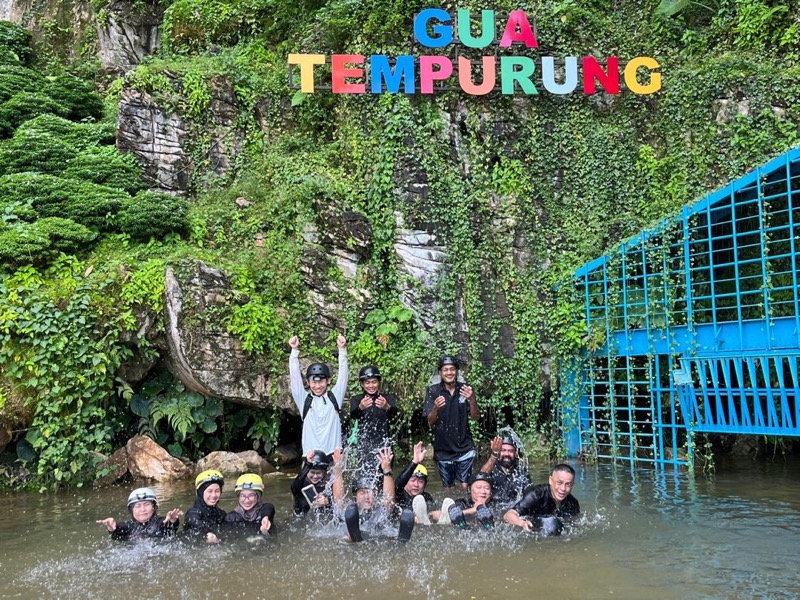
Discover why Gopeng, Perak is the top choice for corporate team building in Malaysia — from Gua Tempurung cave exploration to white water rafting on Sungai Kampar.
Inspired by this read?
Let's discuss how we can bring these insights into your next corporate training or team building session.